I’m still recovering from my five blog posts in five days last week. Whew! It was fun but also a lot of work, and as I said in Tip #10, even blogging can be a form of procrastination. So this week I’m focusing on my novel draft and keeping things simple in the blogging world.
In lieu of a lengthy post, here’s a quick update on a few things happening in my poetic endeavors.
This past Saturday, I attended the Austin Poetry Society’s Annual Awards Banquet at The North Door, where my poem “Up a Tree” won second place in the “Moving Along” contest. At the banquet, I was also inducted into the Board of Directors as the new Corresponding Secretary. I look forward to my new role in the society!
On Monday, I received some more good news. Dos Gatos Press accepted my poem “August in Texas: A Tritina” for publication in the 2015 Texas Poetry Calendar. I am honored to once again be included in this wonderful anthology. I’ll post more updates when the calendar becomes available for purchase. Dos Gatos always does a beautiful job with the cover and the layout of this poetic and practical book.
And yesterday, the Poetry Society of Texas released their ebook anthology, A Texas Garden of Verses, which includes two of my poems: “Something I’ll Miss About My House on Ramsey,” which was originally published in di-verse-city 2011, and “Enchanted Rock in September,” another tritina that first appeared in the 2012 Texas Poetry Calendar. This collection includes eight poet laureates as well as many other award-winning poets and is available on Kindle for only $1.99!
Speaking of the Poetry Society of Texas, membership in this organization is only $25 a year for current residents of Texas, and your membership permits you to submit to any and all of their one hundred annual contests, the deadline for which is August 15, 2014. So, fellow Texan poets, what are you waiting for? Join PST today!
That’s it for this week. I wish everyone productivity in your poetry and prose. (Or a deliciously lazy three-day weekend, whichever you prefer.) 🙂
The word procrastination brings to mind Big Bang Theory reruns and Facebook updates and online shopping and suddenly needing to reorganize the spice cabinet. But these are just the gumballs in a whole candy store of procrastination techniques.
Procrastination can be anything. Anything that keeps you from writing what you’re supposed to be writing.
It can look like this:
Some distractions are ADORABLE.
Or this:
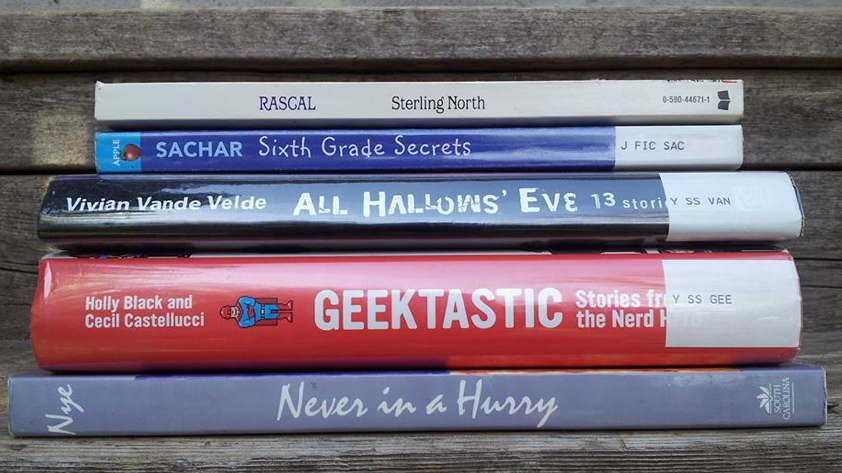
I’m really looking forward to Geektastic.
Or even this:
It’s true. The sneakiest methods of procrastination are the ones that look like work. For instance, spending all day reading writing advice is a form of procrastination. Even taking that writing advice can be a form of procrastination.
Let’s take a look back at this week’s tips.
Start Small, But Dream Big – Submitting stories and poems to publications can be very rewarding, but don’t let those smaller goals keep you away from your bigger projects too long. And dreaming big can be a great motivator, but probably no more than ten minutes a day should be spent practicing an acceptance speech or listing the ways you’ll spend your millions.
Join the Club – Get out there and meet other writers! Join groups and attend festivals and conferences! But if you spend all your time talking about writing, when are you going to write? There’s no point in going to critique groups if you never have anything to share.
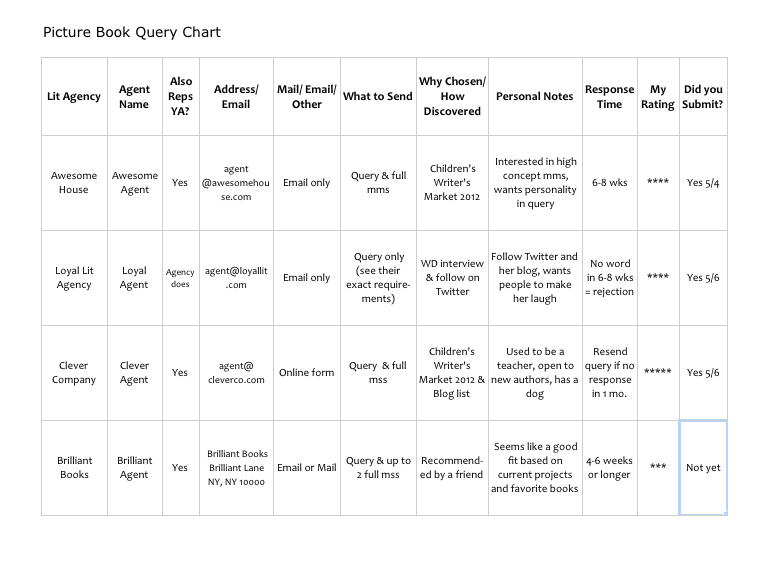
Get Yourselves Organized – Organization is one of my strong suits. I can make a to-do list with the best of them and my Excel files are excel-lent. But there’s a fine line between organized and OCD and I walk it on a daily basis. Once you’ve got your weekly schedule done and your submission chart made, put them away. Stop playing with the font sizes and perfecting the distance between sticky notes. Walk away. You can do it.
The Reluctant Reviser – What? No. Surely not this one too? Yep. Sometimes even revising can be an evil ploy to keep you away from the task at hand. Does chapter 17 really still need that much work? Or are you just avoiding chapter 18 because you know it’s going to be tough to write? Do you really need to read that book about Victorian etiquette right now? Or are you just using research to stall because outlining scares you? Think about it.
Even when we stop to revise, even when we pause to reflect, even when we take a break with one project, somewhere in some area, we must always be moving forward with our writing. To be a writer, you have to write. Everyone says it, and though we may not like hearing it sometimes, it’s true.
Even writing can be a form of procrastination if it’s not the writing you’re supposed to be doing. This week’s blog posts have been fun for me, and I hope some of you have found them useful, but they’ve also kept me away from my other projects, and it’s time for me to go back.
Today, I’ll keep things short, so that you have one less excuse to keep you from your writing. Let’s get back to work. All of us.
Bonus Links:
750 Words – This is a great tool for helping you get words onto the page. I’ve produced many a paragraph during their monthly challenges.
Your story, poem, novel chapter, or query letter is not good enough. You know this either because it’s been rejected three times or because a critique group gave you negative feedback, or because you just know, in your gut. Even so, you’re having trouble finding the motivation to revise. These are your words, and you liked them when you wrote them. You like them still, even though they’re not getting the job done. So you sit and you stare and you move commas around and replace adjectives with synonyms of those adjectives and you eat some chocolate. You, friend, are a reluctant reviser.
Revising is a vital part of the writing process, and getting over the reluctance to revise is an integral first step. If you find yourself stuck in the “it’s fine the way it is” swamp, try one of these tips to get yourself, and your writing, moving again.
My poem “Wildflower Season” after a revision workshop with Cindy Huyser at this year’s AIPF
Tip #7: Clone Your Darlings
I always find it difficult to cut parts of a story or poem. I know I’m supposed to “kill my darlings” but what if I kill the wrong ones? What if I take something out that should have been left in? In short, what if I revise wrong?
The answer to this conundrum is so simple it’s stupid, and I’m embarrassed at how long it took me to think of it. Just make a copy first.
Before you kill your darlings, clone them. That way, if anything goes horribly, horribly wrong, you can go back to the original and start over. Now, whenever I start revising a short story that has been deemed “too long” or “too wordy” or “could be tightened up a bit,” I first create a duplicate of the file, labeling the two identical documents story_original and story_revised. Then I go to town chopping and cutting and pulverizing the revised copy, safe in the knowledge that those poor words I’m deleting still exist elsewhere. When I’m finished, I compare the results with the original, and you know what? I almost always like the new, concise version better. (And it usually irks me a little bit.)
Even after you cut sentences that you loved and accept the truth of their inadequacy, you may still have trouble sending that original file to the trash. That’s okay. You can be a file hoarder for awhile. It’s not like you’ve got a living room full of old Reader’s Digests and headless Barbies. (Right?) No one can see your Dropbox account. No one has to know.
I like to collect all of the deleted sentences and paragraphs with which I cannot bear to part in a single file. I call it Prose Purgatory. There the work sits, waiting in limbo, until I can finally accept that it is unnecessary and must be destroyed. This, however, is a rather cruel system. I urge you make the revisions as quickly and humanely as possible.
If I had taken the time to revise, I would have noticed that my phone changed the word “raccoons” into “tacos” BEFORE I posted this status update to Facebook. Oops.
Tip #8: Listen to Yourself
When staring at your writing isn’t producing any epiphanies, try listening to it.
If you haven’t already discovered the benefits of this trick, you should. It’s amazing how many issues appear, as if by magic, when you read your work aloud. Silly typos that your eyes skipped right over suddenly grab your attention when you slow down and speak the words. Problems with pacing reveal themselves. Accidental repetitions practically glow on the page when moments before they did an expert job of hiding. Honestly, this is a strategy that can’t accurately be described. You just have to try it to see how well it works.
[Note: It was not until I read the previous paragraph aloud that I noticed I’d used the word “amazing” twice. I deleted the second one without giving it even a moment in Prose Purgatory.]
This was one of my favorite tricks to teach my seventh graders. Since there were twenty to thirty of them in a class, I had them put on headphones or cover their ears with their hands to drown out the other voices and feel less self-conscious. Plenty of them had assured me they were “done” and were skeptical about finding any more errors in their drafts. It was hilarious listening to a room full of kids all reading their personal narratives aloud at the same time, but it was even funnier watching one of the nonbelievers take a hand away from an ear to make an edit before catching my eye and blushing. I know this isn’t a very attractive thing to admit, but I love being right.
If reading your drafts aloud is already part of your writing routine, then try this: When you’ve found all the typos and repetition errors and you feel (again) your chapter or story is the best it can be, record yourself reading it. Then burn it to a CD or put it on your iPod and listen to it while you’re driving around or jogging or waiting in line at the pharmacy. (Yes, this means you will be literally listening to yourself talk. It’s okay. No one will know. Just don’t forget to turn the volume down before you order a coffee at the drive-through.)
This process is for ferreting out the more subtle issues with your piece. Where did you get bored, zone out and have to rewind? Where did you laugh out loud? Where did you notice a place that needed a bigger punch or more specific description?
The only danger here (besides a strong case of narcissism) is that you might be constantly pulling your car to the side of the road to take notes. Try not to cause any accidents. Remember that this is recorded. You can play it again, as many times as you want. Also remember that if you die in a car accident, then everyone will know the last thing you were listening to was the sound of your own voice.
Tip #9: Nothing Sounds Like a Carrot Except a Carrot
Mel Blanc, the voice of Bugs Bunny, spit out the carrots he chewed during recordings. This led to the rumor that Blanc was allergic to carrots or hated their taste, but that wasn’t the case. He simply couldn’t deliver his lines with a mouthful of carrot. So why not use something else to make the sound effect of Bugs’s chewing?
The sound of Bugs chomping on a carrot while delivering a wisecrack was a key element from the beginning, but a technical problem soon became apparent: after taking a noisy bite of carrot, Blanc would have to chew for a while before he could swallow enough of it to deliver his next line. Other crunchy but more easily chewed foods (apples, celery) were tried, but the resulting sounds were deemed insufficiently carrotlike. The simplest and best solution, it turned out, was for Blanc to briefly chew on an actual carrot, then spit it out and go on with the voiceover. Ultimately a spittoon became a fixture in Mel’s recording-studio setup.
“Insufficiently carrotlike.” I love that.
Sometimes what’s wrong with your piece of writing can’t be found on a word level or sentence level or even paragraph level. Sometimes the writing itself is fine, but the story lacks authenticity. The reader can tell you got lazy and used an apple instead of a carrot.
I used to hate the word research. Somewhere during my school years, it became synonymous with tiny handwriting on note cards that kept getting out of order and mind-numbing encyclopedia text and bibliography pages. Only recently have I figured out that research is just learning about stuff, investigating, becoming one with a topic. And it can be fun.
Since the main character of my YA novel is an eighth grade gamer, I get to count the following things as research:
Reading books like Extra Lives by Tom Bissell and All Your Base Are Belong to Us by Harold Goldberg
Playing hours of Galaga and Ms. Pac-Man at the arcade
Standing behind my husband while he’s gaming, asking him questions like: “What’s that thing for? Why did you decide to change your armor? What would happen if you jumped off that cliff? How come you’re not killing those guys? Are you dead now? What will you do differently next time?” (This counts as research AND quality family time.)
Not all research is fun though. I got a pretty massive headache after trying to decipher the language of the World of Warcraft message boards. But I did it, and if need be I’ll do it again. (*shudder*)
The point is that you can’t fake it or your reader will know. You have to spend the time and do the homework to get it right. If that means reading books on archaeology, or shadowing a Home Depot employee for a day, or hanging out in an arcade for an afternoon writing down the things people say when they see the words GAME OVER on the screen, then do it. Sadly, not all story issues can be solved just by cutting and pasting or listening to yourself talk.
Sometimes you have to chew the carrot and spit it out. Like it or not.
For more revising tips, check out these posts from two of my favorite blogs:





 Carie Juettner