They call it a “foster fail” but how could anything this wonderful be seen as a failure?
No, we weren’t planning on adopting any of the kittens from the litter we rescued*. There were many reasons for this, and we listed them over and over to anyone who asked why we weren’t keeping one, two, or all of the babies. “It’s not the right time to grow our pet family.” “We’re just renting right now; we should wait until we buy our next house.” “We already have two elderly pets we love very much.” Blah, blah, blah. I’m going to stop here because you’re not listening anymore anyway. No one was. Everyone nodded at us, rolled their eyes, and told us we’d end up with a kitten. But we really really REALLY weren’t going to. Really.
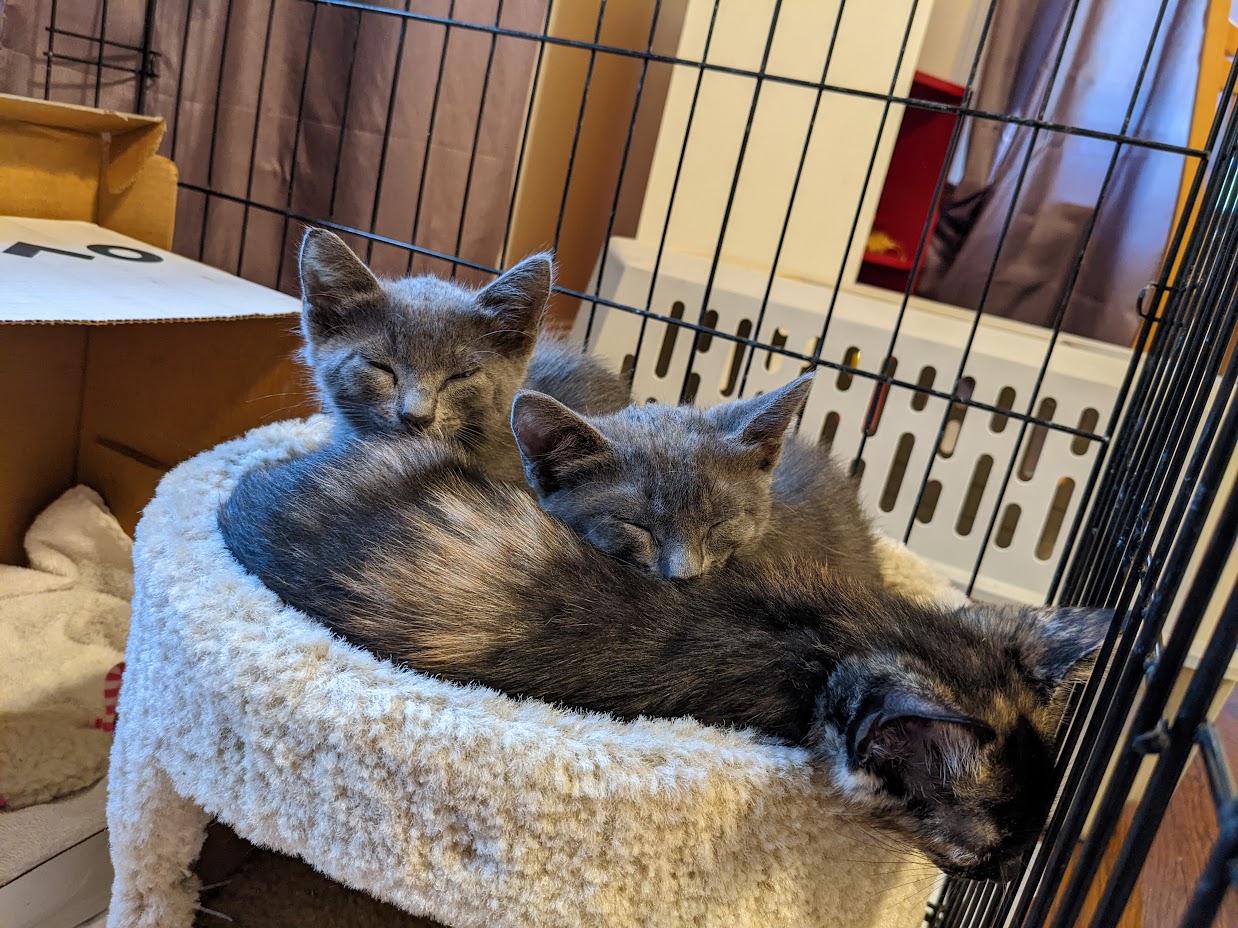
And then… we had three kittens left, and two of them got adopted together. That left one.
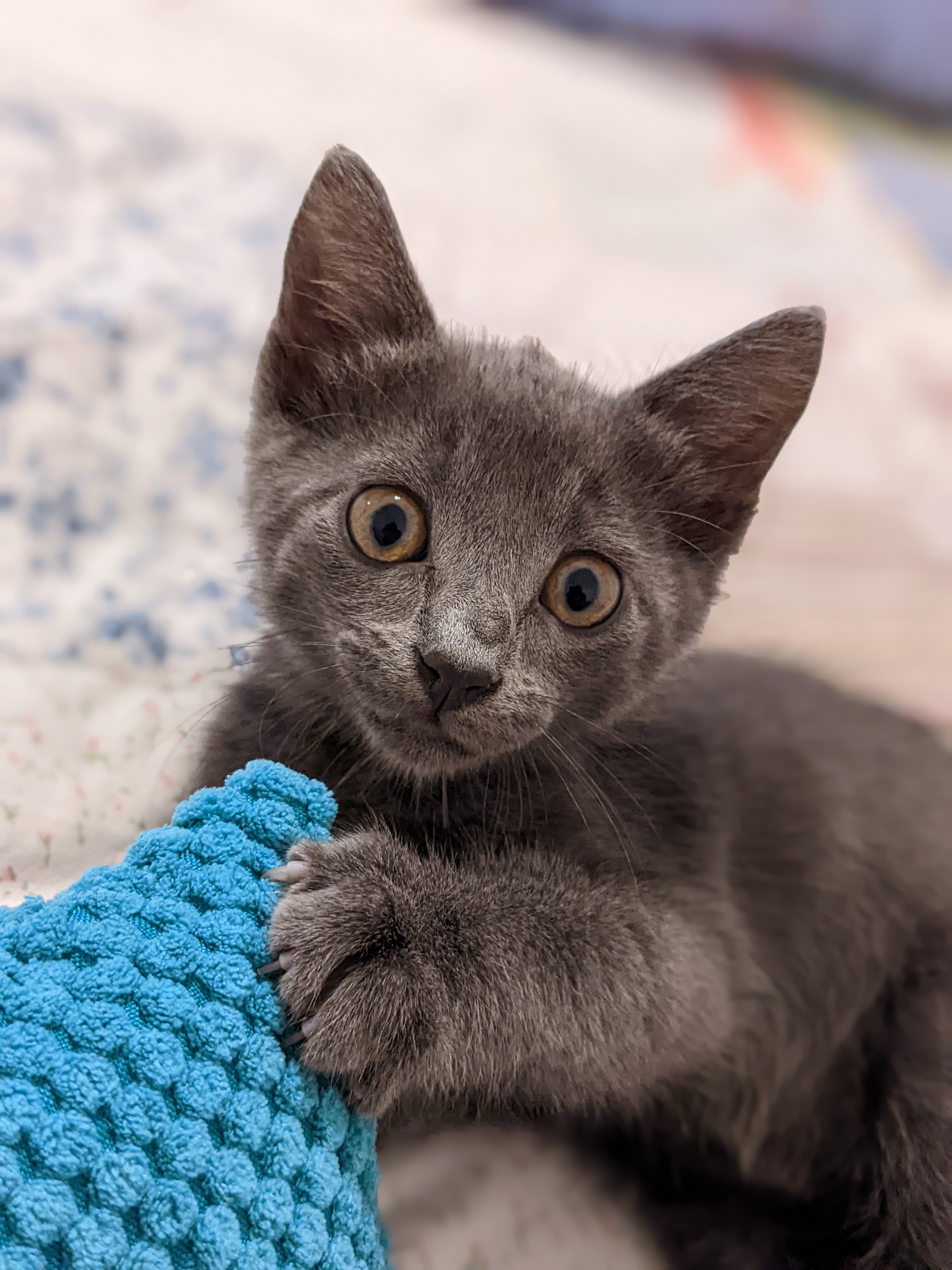
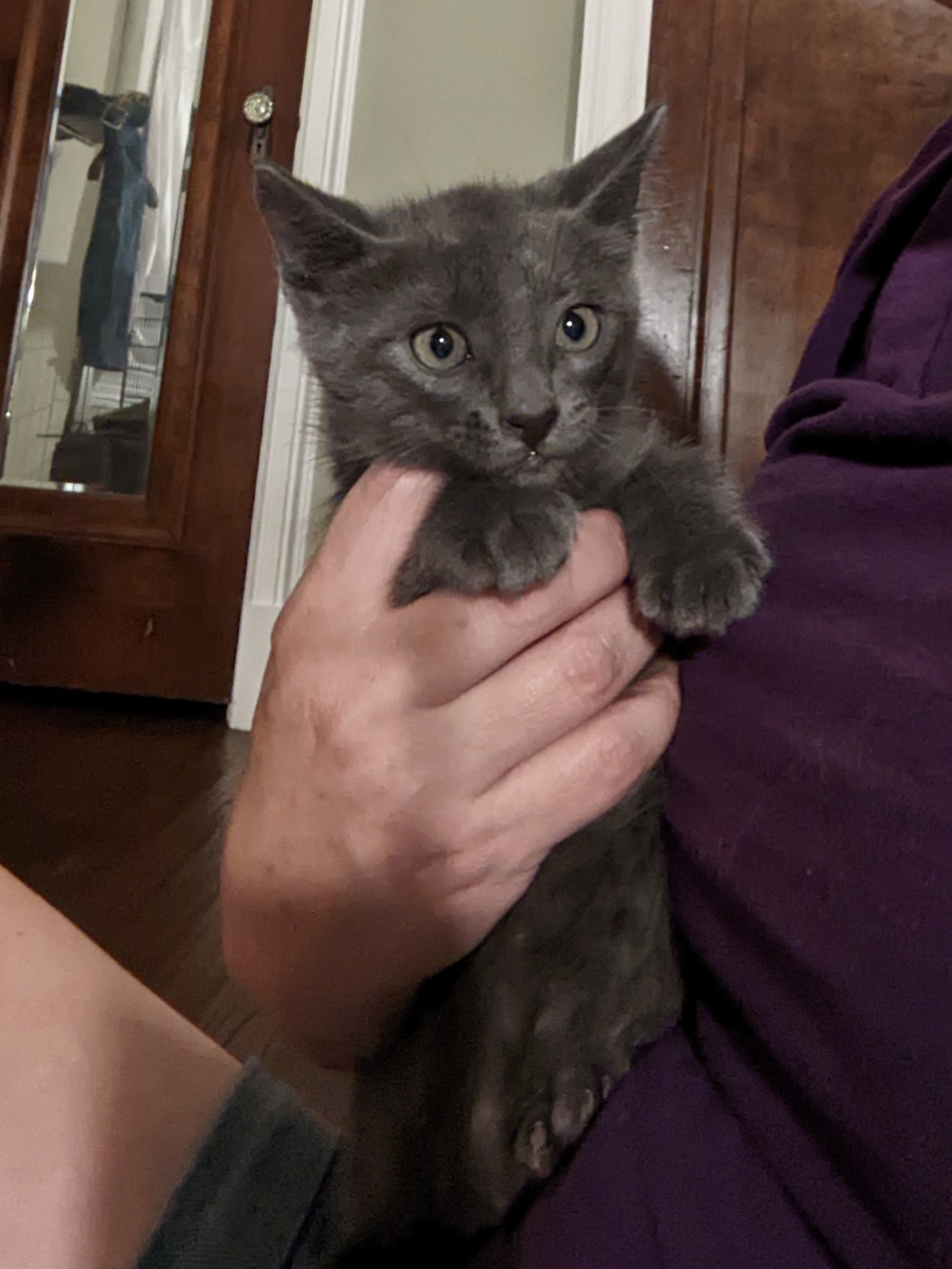
The last kitten was truly the last kitten. He was the one we didn’t catch until five days after the rest of the litter. He was the one who spent most of his first day in our house exploding in tiny spits and hisses if you looked at him. He was the one who we named Will because, in our Stranger Things-themed litter, he was the one who had been lost in the upside down, separated from the others.
This solid blue, fuzzy little hot pepper had been in our house for five days when his siblings left for their forever home, and I’d already managed to get him from extra spicy to medium spicy via the use of the purrito and other methods of forced cuddling. (The little guy was never vicious, just scared. Once you got ahold of him, he never bit or scratched. It was just the being picked up part, or rather the THOUGHT of being picked up, that unnerved him.) So, on Sunday, when Eleven and Dustin went home with their new family, he was all alone again. And he started crying.
The purrito
Your heart is probably already melting at the idea of a lonely kitten mewing, but let me make it even worse by telling you that his tiny cries sounded more like a screech owl than a cat. They were truly pitiful. That night, I let him out of the crate and played with him and talked to him and snuggled him and showed him the beauty of belly rubs. We bonded, and he purred against my chest as I hugged him. Then I (uh oh) gave him a real name. The next morning, I told my hubby, “We need to keep this cat.” He agreed.
Indie is ready for his first Halloween.
Foster fail? Um, no. Indigo William Juettner was always meant to be ours, we just didn’t know it yet**. Sometimes that’s just the way life works.
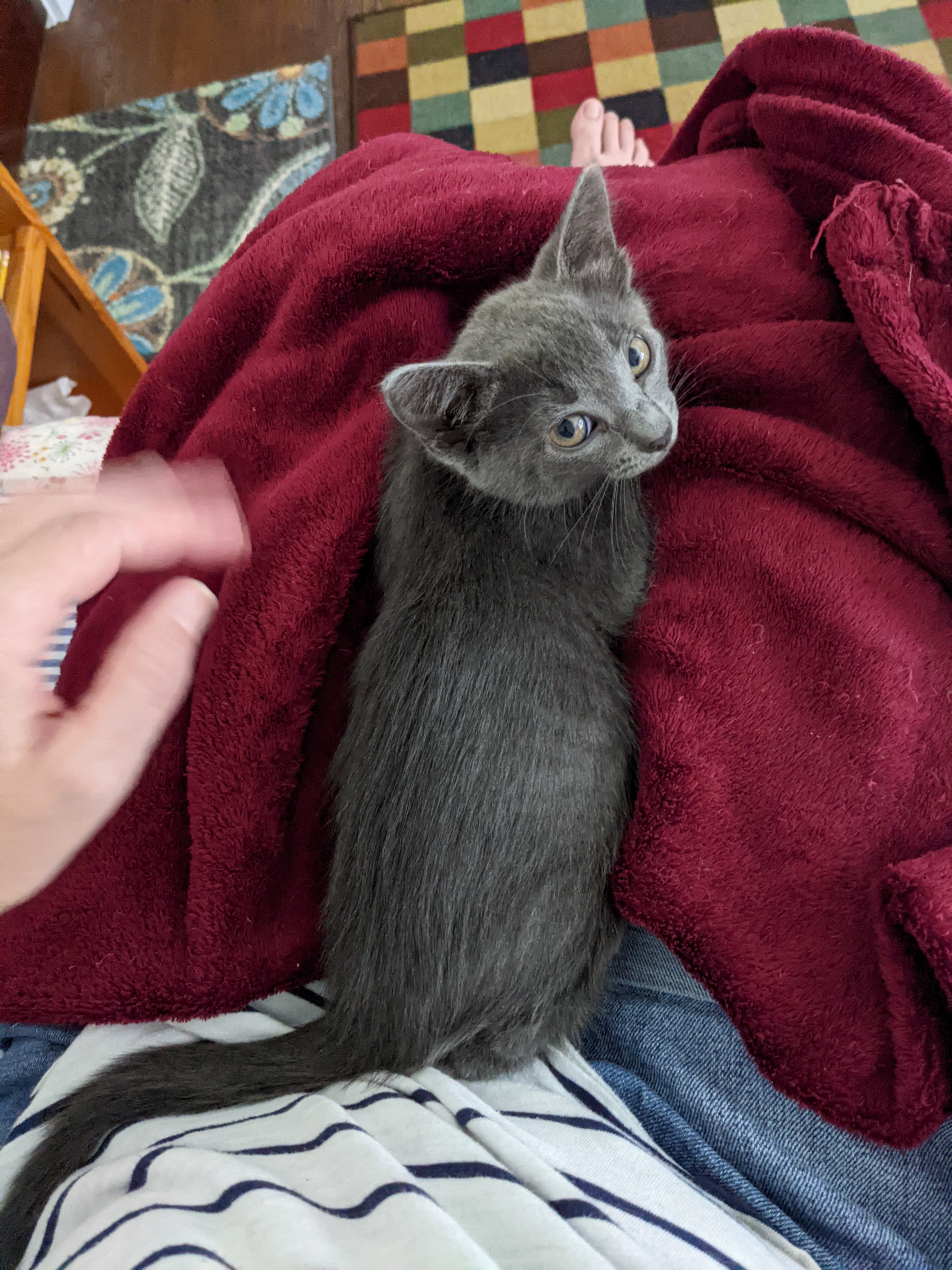
Indie has been an official member of the family for two days now. It’s been a busy two days of feeding him constantly (I think he’s part Hobbit), cleaning up after him (eating constantly = pooping constantly), and helping him feel like part of the family.
We introduced him to the dog. I think it went well.
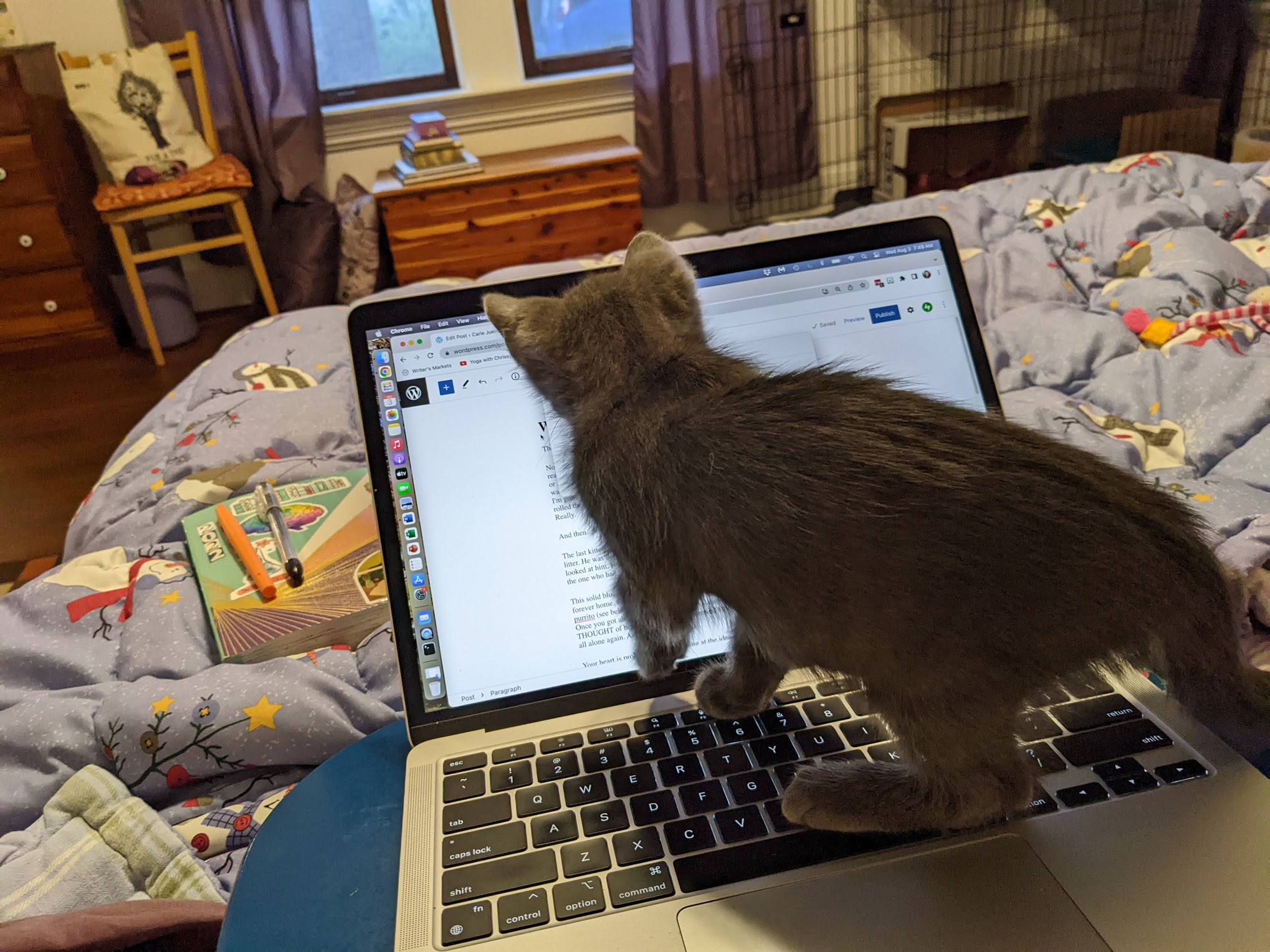
Indie is currently romping around the bed as I type, falling off at regular intervals and pouncing on my back occasionally. It’s only a matter of time before he hits a button on my laptop and deletes this post or translates it into Italian or something. Any typos you find are his fault.
Indigo is such a joy, and this whole process of kitten fostering has been so rewarding. I want to thank everyone for helping us find homes for these sweet babies and for believing, all along, that one of those homes would be ours***.
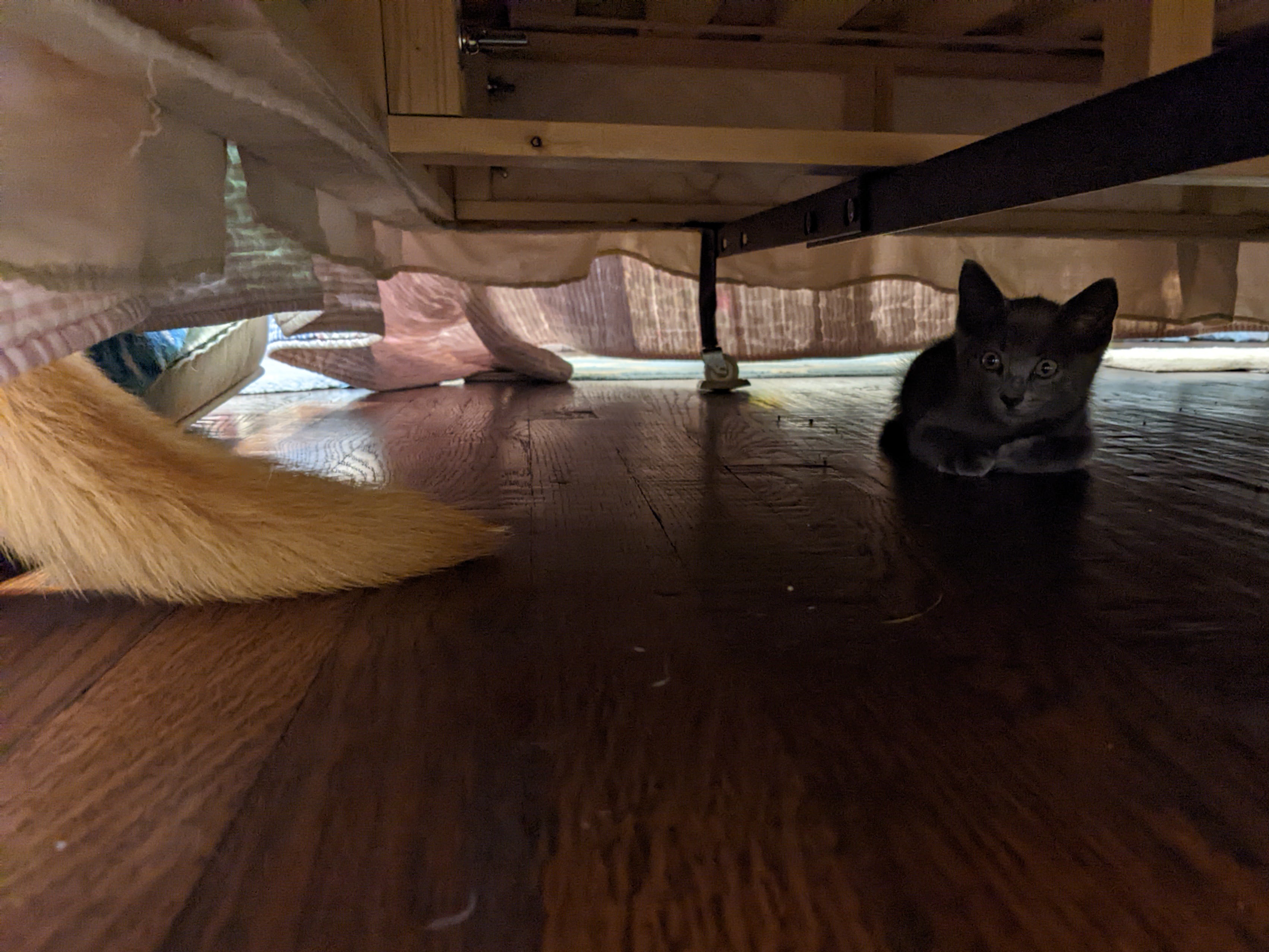
Now to figure out how to live life with a growing kitten in the house. Wish me luck. (Indie just zoomed around the room, bowed up at nothing, and then hid under the bed.)
* I just asked my hubby if “rescued” was the right word for what we did, since the kittens weren’t actually in danger at the moment. He suggested we “absconded” with the kittens and told me I had to include a Willow quote, so here:
** Everyone else knew it. My big announcement that we were keeping one of the kittens was met with a lot of laughter, eye rolls, fake shocked looks, and “I-told-you-so” comments. People think they’re SO smart.
*** Yes, yes, you were right. There, I said it. Happy?
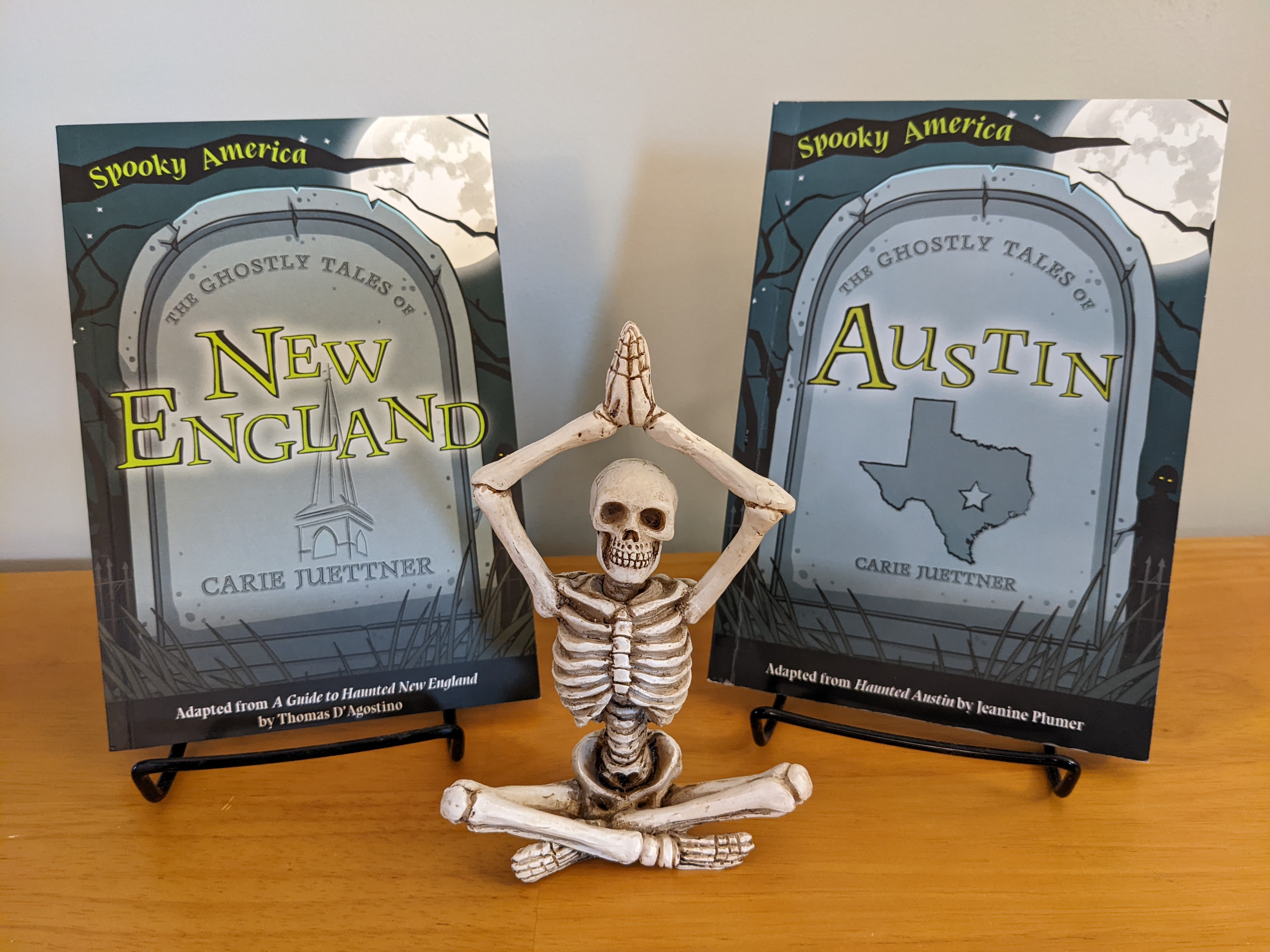
It’s my book’s birthday! Today, The Ghostly Tales of Burlington makes its eerie entrance into the world.
This collection of nonfiction stories for readers 8-12 is my third in Arcadia’s Spooky America series, which adapts the popular Haunted America books into volumes for younger readers. My first book explored haunted historical sights all over New England, and my second book featured Austin, the city I called home for more than twenty-five years. For my third book, I was excited for the chance to delve deeper into the New England hauntings with a focus on the terrifying tales in and around Burlington, Vermont.
Haunted Burlington, the original book, was written by Thea Lewis, who gives ghost tours in Burlington during August, September, and October. If you’re in Vermont this fall, I highly encourage you to make time for one. Her book is excellent (and so much fun to adapt for kids!) so I know getting to hear her stories in person would be even better.
What I love about this collection of stories is how varied they are. Some of the specters in The Ghostly Tales of Burlington will touch your heart, like the firefighter who kept watching over his crew even after he departed this life. Some are just weird, like the man who attended funerals for fun. And others are downright spine-shivery. The story of “The Ghost Girl” in the chapter called “Winooski’s Wandering Spirits” is one that gives me the biggest heebie-jeebies. Maybe don’t read that one right before you go to sleep.
Whether you’re Burlington-born, just passing through, or have never crossed the border into Vermont, if you like learning about haunted places, you’ll enjoy the history and horror of The Ghostly Tales of Burlington.
Where Can I Get a Copy?
Option 1: From Me!
If you would like a signed, personalized copy of my book, buy it directly from me! I accept cash, check, PayPal (@cariejuettner) and Venmo (@Carie-Juettner). The books are $10 if I can hand it to you in person or $12 if I need to mail it. I have copies of my other two books available too. Just send me an email (cariejuettner@gmail.com) with which books you want, how many, the address where I can mail them, and who you want them personalized to.
Option 2: From Your Local Bookstore!
If you’re not interested in a personalized copy, do your best to support the bookstores in your town. Even if your local store doesn’t have copies on the shelves, you can probably order the books from them. Give it a try! I know that BookPeople in Austin should have copies in store soon if not already.
Option 3: Amazon!
Can’t wait for your date with terror? Need your ghost stories ASAP? Order my books from Amazon. The books are available in both paperback and Kindle edition. If you like what you read, go ahead and give it a good rating or write a short review.
What’s Next?
I hope to write a fourth book for the Spooky America series, but until then, I’ll be working on my own ghostly novel for middle grade readers. No spoilers yet, but stay tuned for updates when I finish. I’ll keep you posted.
You may think you’re ready. You may have bought all the things you were supposed to buy and prepared all the accommodations you were supposed to prepare. You may even believe, naively, that you are mentally and emotionally equipped to devote your days to the care of someone other than yourself. But until you have a dog crate full of squirming, flea-infested babies who walk through their food dish, lay down in their litterbox, and then use their brother’s head as a stepstool to leap to the top of the cage only to crash down into the water bowl—only then will you truly grasp what you’ve gotten yourself into. (If you haven’t been following my blog, you might be confused or calling Child Protective Services right now. Please, calm down. The babies are kittens.)
On Thursday, July 21st, at 6:30AM, my house and my life were both pretty tidy. Yes, there were a few dirty dishes in the sink, and of course I needed to vacuum the dog hair (When don’t I need to vacuum the dog hair?) but otherwise, things were running on schedule. My to-do list included yoga, grocery shopping, writing time, and date night. None of those things happened.
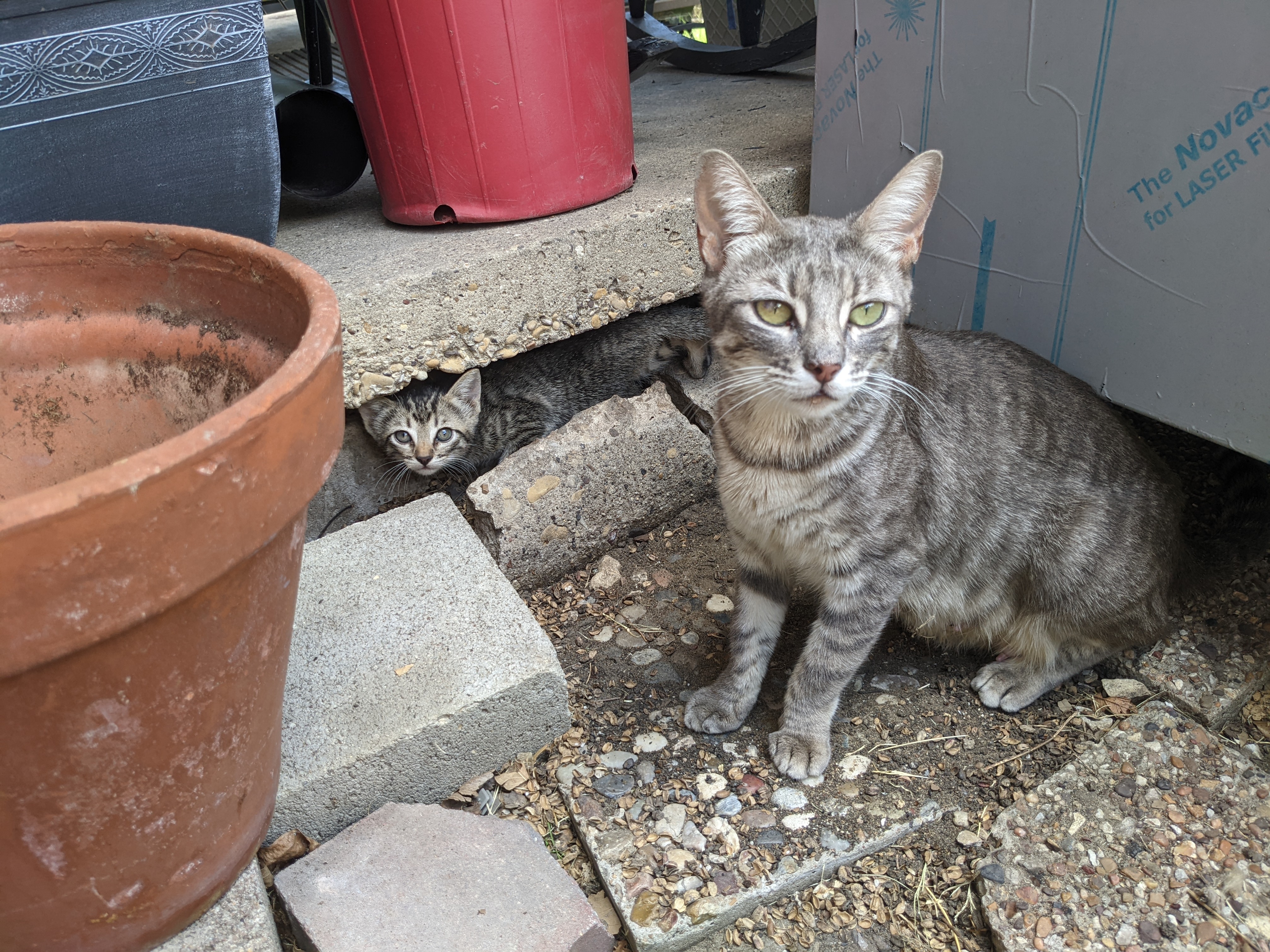
After stalking mama cat (now named Maggie) for a few of weeks, I had finally located her kittens under a neighbor’s house. On a couple of occasions, with bribes of wet food and some very good sweet-talking on my part, I convinced Maggie to call her kittens out. I got the chance to glimpse a few of the adorable little fuzzy things, but she was still guarding them, and I couldn’t get close. Once, she even brought a few of the babies to my driveway. This seemed like a promising turn of events until the kittens climbed up into the underside of my car. Maggie and I agreed the visit was not going well, and she took them home again.
Finally, last Thursday, I saw my chance. When I went to feed Maggie that morning, she wasn’t waiting on my porch as usual, so I walked over to the house where she was keeping her litter. There she was, laying in the driveway, watching her kittens play all around her. At first I thought Maggie had four kittens, then I counted five. The truth was she had SIX growing babies. No wonder she was always so hungry! I could tell the kittens were healthy and well-fed. Maggie was obviously a good mama. They were seven weeks old and cute little bundles of energy. It looked as if I had interrupted climbing practice; the kittens were taking turns scaling the wooden fence while proud mom looked on. I gave Maggie a plate of food and went to get my humane trap.
Between 7:00 and 9:00AM, I had caught five kittens and Maggie. (Don’t worry, we caught kitten #6 a few days later.)
It was crazy! As my brother put it, it was like I’d found the perfect fishing hole and just kept reeling them in. I’d catch a kitten, bring it home and put it in the crate, re-bait the trap, come home to check on the kitten, go back to check the trap, and there would be another one in it. And repeat.
That’s when my to-do list went out the window.
The kittens took all of two seconds to settle in and become friendly. We could pick them up and cuddle them immediately, and they took to their kitten food like champs. Mama Maggie watched serenely, seemingly unconcerned as I carried off her children, but when SHE ended up in the trap, she was not happy. We needed to get her to a vet for her spaying surgery ASAP so that we could release her. I called a few places and found a clinic that would take her that day, so hubby and I jumped in the car, drove Maggie to the vet, got her checked in, and made it back home just in time to meet the notary at our house to sign the closing documents for selling our home in Austin. Whew! (I guarantee you I did NOT smell good during that meeting. Also, it was hard to sign my name 47 times due to a cat bite on my thumb that occurred during the process of getting Maggie from the trap into the carrier.)
Documents signed, notary departed, I let out a sigh of relief and then thought, I have a litter of kittens in my bedroom. This is going to be so fun!
I was right. Mostly.
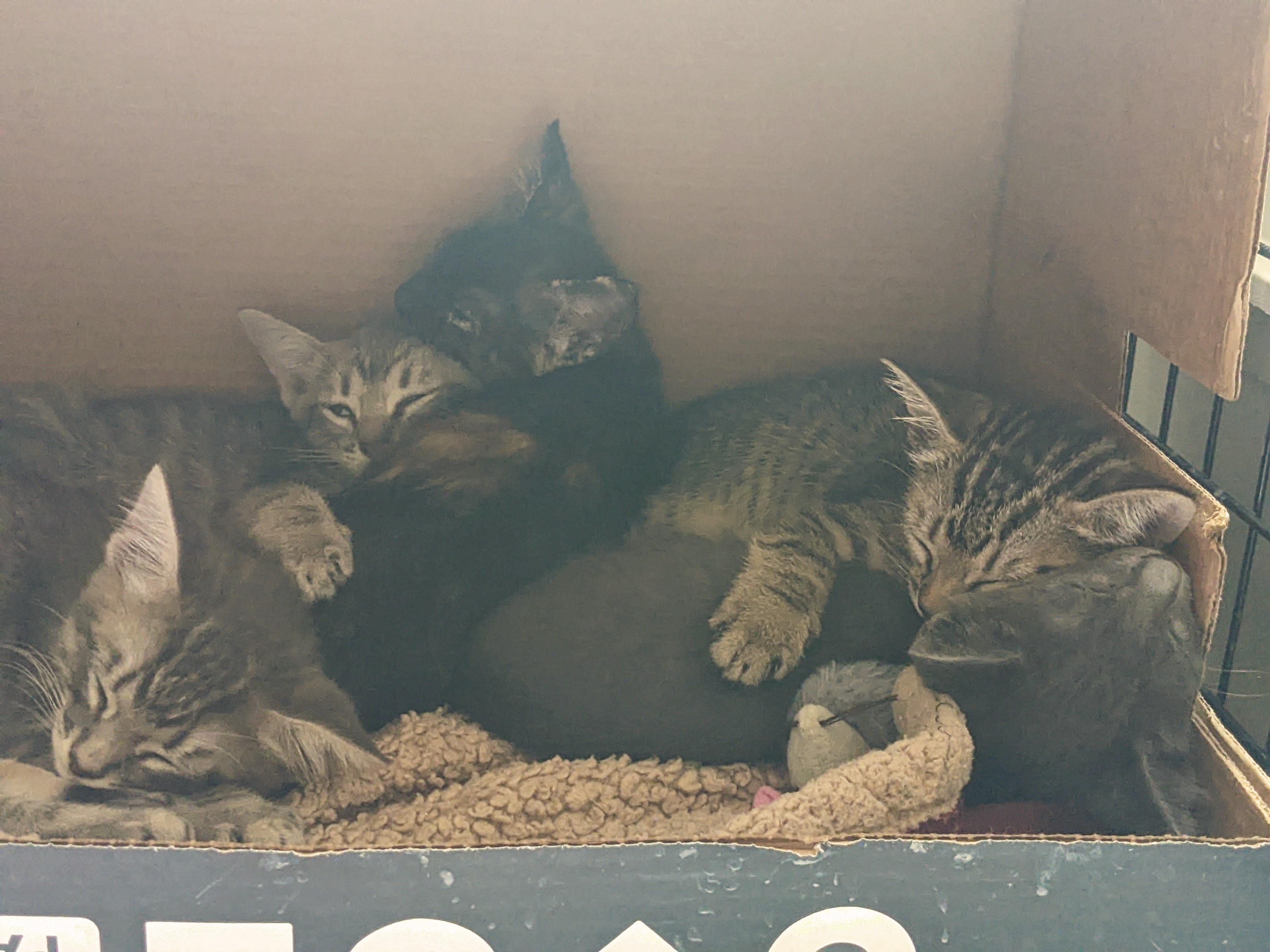
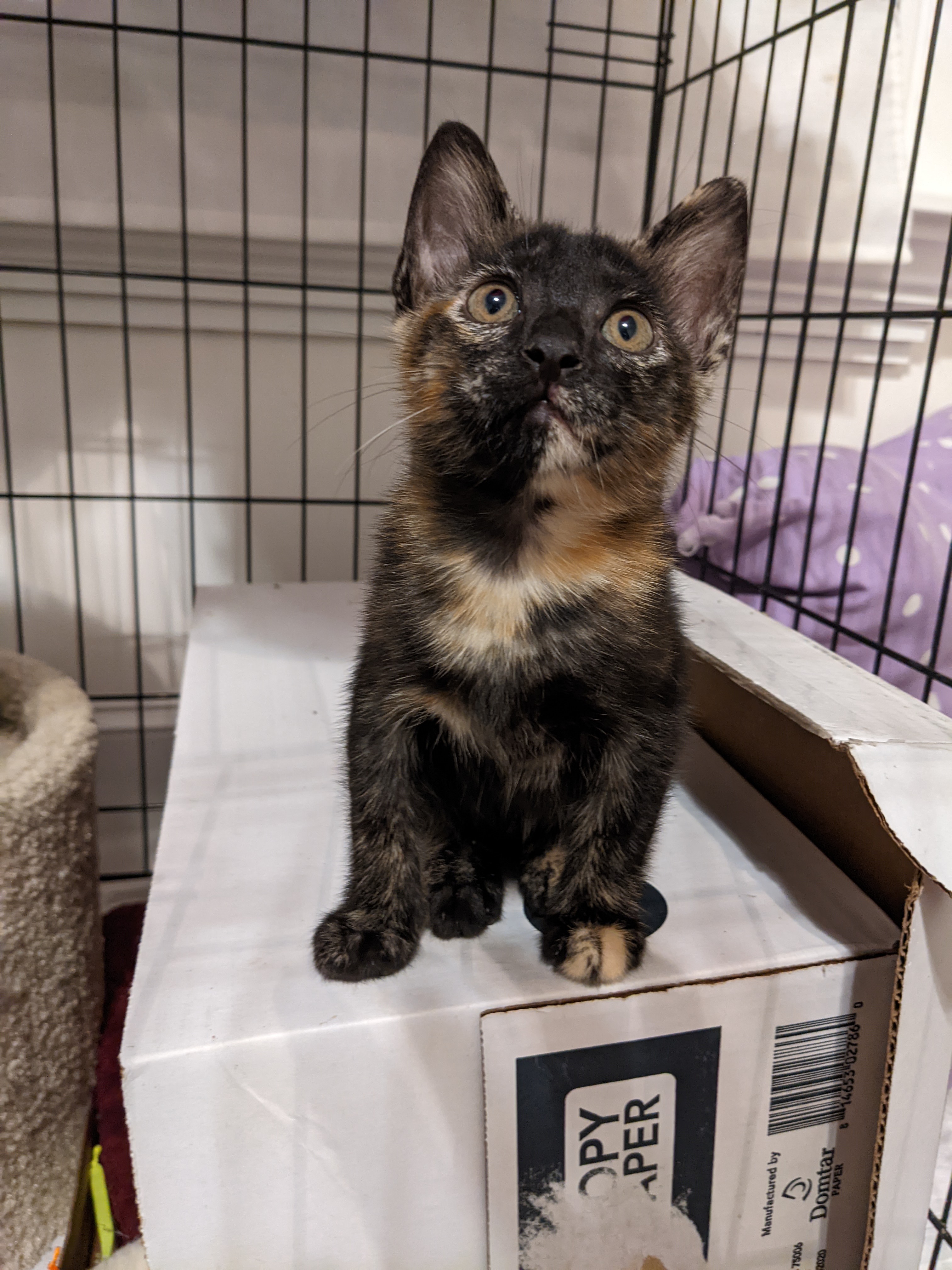
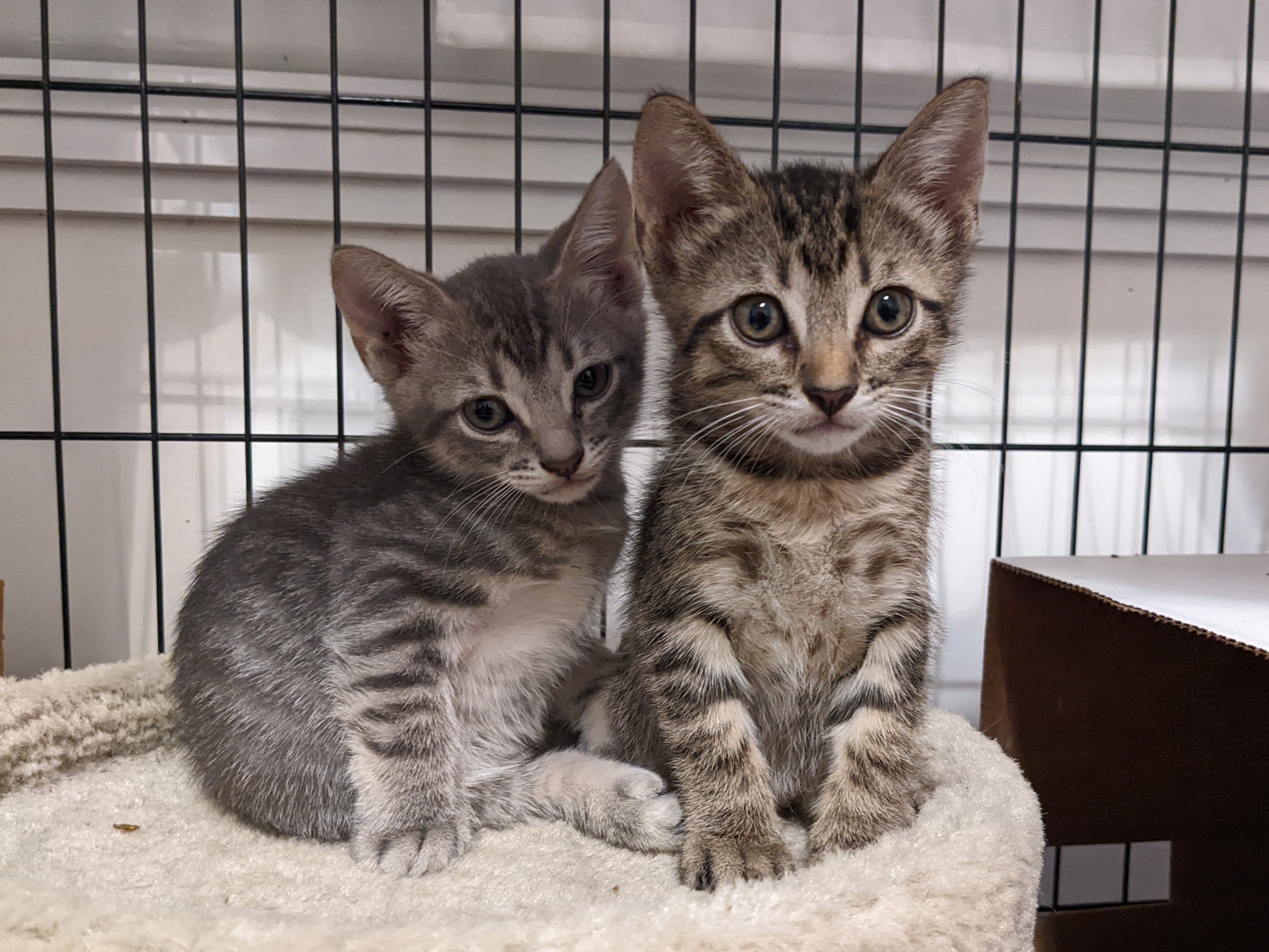
I named the babies after the characters in Stranger Things. Meet Eleven (the tortie and only girl in the litter), Hopper (the brown tabby), Steve and Eddie (the gray tabbies), and Dustin (the blue one). The other blue one is kitten #6, named Will because he spent the first few episodes of the kitten saga lost in the upside down before rejoining the litter.
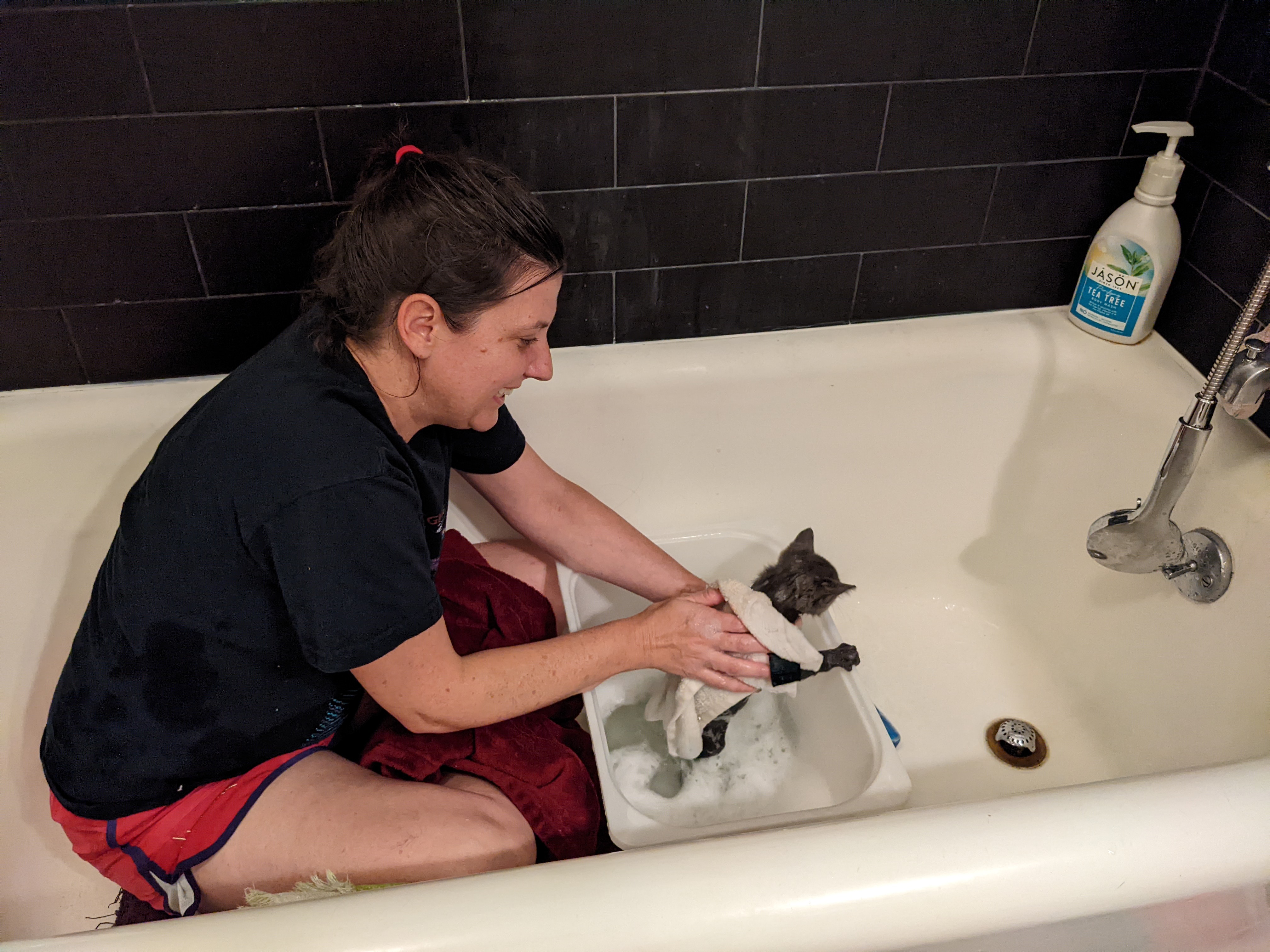
The following week was an endless loop of feeding kittens, bathing kittens, cuddling kittens, cleaning up after kittens, hosting people visiting kittens, making flyers about kittens, sending kittens home with adoptive families, looking for kitten #6, catching kitten #6, re-bathing all the kittens thanks to kitten #6, convincing Maggie to trust me again after releasing her post-surgery, herding kittens, briefly losing kittens before finding kittens under bookshelves or inside the bed, and taking many many many photos of kittens. During this time, there was not a ton of showering, eating regular meals, maintaining my house, or writing. Or sleeping. Or remembering what I did with my life before kittens.
The babies are an absolute joy. I’ve watched them learn to play and wrestle and climb. I’ve heard them purr and squeak. And I’ve felt them fall asleep in my lap as I stroke their tiny faces.
But, to be fair, the kittens are also disgusting and exhausting. I’ve watched them roll in the litterbox right after going potty in the litterbox (Hopper). I’ve heard their persistent mews at 4:00AM (Thanks, Eleven). I’ve smelled their not-so-little kitty farts (Cheers to you, Eddie). And I’ve cleaned up the accident someone had right underneath the center of my bed (I’m looking at you, Steve).
Motherhood, as it turns out, is actually kind of difficult.
Now, eight days from that exciting Thursday morning, life is finally starting to go back to normal. Hopper, Steve, and Eddie have all gone to their forever homes, and the three kittens who remain have stopped crying at night and using the litterbox as a playpen. I’m finally getting some writing time and have even taken a shower today. Woo hoo!
I’m so grateful that I found these precious babies and had the free time to take care of them. It’s been a gift getting to spend time with cats this young. I’ve loved every second of it (even the gross parts) and now I’m ready to send them on to loving homes. Hubby and I have decided that it’s not the right time for us to take on a new baby. We have an 11-year-old dog and a 24-year-old cat (no, that’s not a typo) who we love very much, and they are enough for us right now. Plus, there wasn’t a troublesome orange tabby in the litter.
I’m also grateful that we were able to get Mama Maggie fixed. She didn’t like being trapped and taken to the vet, but I know it was the best thing for her. Since my last post, I’ve learned that this was actually her third litter, poor thing.
I have someone interested in Dustin and Eleven, but little Will still needs a loving, patient home. If you’re in the Dallas area (or willing to drive here) and looking to adopt a new little fur baby into your family, send me a message!
Tips for Trapping and Caring for Baby Kittens:
Buy or borrow a good trap. Kittens are tiny, so you need a trap that won’t hurt them but that’s sensitive enough to spring with very little weight. We have this one, and it worked great. Also, figure out how to work the trap BEFORE you need to use it. For me, the trap wasn’t intuitive, which meant I had to wake up Hubby to show me how to work it.
Don’t be a hero. Wear gloves when interacting with a feral cat. I’m very fortunate that the bite on my thumb didn’t become infected. Thanks to thoroughly cleaning the wound, soaking in Epsom salts, applying Neosporin, and a fair amount of luck, my bite healed nicely, but it hurt like heck and I couldn’t open a bottle or a turn a doorknob without wincing for days.
Don’t let personal feelings sway the facts when describing a feral cat. When we took Maggie to the vet, they asked how feral she was. I thought about how after weeks of patience she would now eat just a few feet away from me and how I had touched her twice (briefly) and not been killed, and I said she was “moderately feral.” When we picked her up from the vet, they informed me that she was “extremely feral.” Oops! Perhaps a chart of some sort would have helped me.
Acquire a lot of towels. No matter how many towels you think you might need to care for a litter of kittens, you need more. Prepare to do a lot of laundry.
Labels are important. Toothbrushes are excellent tools for kitten care. They’re useful for bathing, especially when you’re soaping up their tiny necks to keep the fleas from running to their head, and they’re good for gently stroking their widdle faces to remind them of their mama. But when you decide to take your own old toothbrush and use it on cats, you need to label it for that moment when you are severely sleep deprived and need to brush your teeth.