The Power of Awareness

YogaYoga

I’ve been doing Kundalini yoga for years. I’m still no expert at it, partly because there are ways in which my body refuses to bend regardless of how much “mind over muscle” I apply, and partly because I’m not consistent enough with my practice. Sometimes I go to Yoga Yoga three times a week, and other times three months lapse between classes. During those breaks, when I let words like “time” and “busy” and “tired” keep me away from the mat, I never feel as good as when I snap out of my funk and get back in the routine. It only takes one class after a long break to remind me that I do have time, I’m not too busy, and that yoga is a cure for tired, not a cause.

Kundalini means “awareness.” When I describe it to people, I say that it’s a gentle, meditative type of yoga for people of all levels that is done under dim lights, mostly in a seated position, using various mantras and different types of breathing. A more correct, official, and eloquent explanation can be found here.

What I Like About Kundalini

  • It teaches me to be still both mentally and physically.
  • It brings me calm and reduces my stress and is sometimes (but not always) a physical workout.
  • Kundalini teachers say, “Challenge your muscles, honor your joints.” They push students to work past mental barriers and transcend discomfort while always reminding them to be safe and know their limits. They modify for injuries and other health issues so that people of all ages, body shapes, and athletic ability can benefit from the classes.
  • There are literally thousands of different kriyas (sequences of exercises, postures, etc.) in Kundalini, so the classes are never boring and rarely repetitive. Also, some of the exercises are actually pretty funny. At times, I like to pretend I’m a fly on the wall watching a room full of people donkey kick or flop like fish on their mats.
  • Each teacher brings his or her own personality and perspective to the class. One of my teachers gives a lesson at the beginning, explaining exactly how the day’s work will affect our bodies and brains. Another begins class by telling us what constellation the moon is in and what sort of activities are best completed (or avoided) that day.
  • Each class ends with a deep relaxation while the teacher plays the gong. I cannot explain how relaxing and rejuvenating and powerful this is after an hour of practice. You just have to try it for yourself.
  • Despite the fact that I’m supposed to be quieting my mind, during Kundalini I often get solutions to problems, new perspectives on struggles, or ideas for writing pieces I’m working on. They just appear in my head as if they’ve been there all along (which of course they have). Once in a while I even get answers to questions I never saw coming.

Epiphanies, Answers, and Interior Decorating Tips

Most teachers ask students to set an intention at the beginning of each yoga class and it is something I now do regardless of whether or not they say it. Usually mine is something like relax or be positive today or be productive or be open to what the day has to offer or be creative. But four years ago, just after I got married, when my husband and I were turning his house into our home and painting all the rooms, I went to yoga with a very silly (and very specific) question in my mind. What color should I paint my kitchen? Everything else had been a pretty easy choice, but I kept waffling about which color to use in our kitchen and dining area to cover up the previous owner’s flower stencils.

I hoped that in my meditative state the answer would come to me, an epiphany that would take this silly but somewhat stressful decision and make it clear. I, of course, didn’t expect my yoga experience to literally tell me what color to paint my kitchen.

But it totally did.

For the first time ever in any yoga class I’d attended, our kriya included a meditation where the teacher asked us to picture the colors of the rainbow in order, slowly visualizing each one. When we had done this for a little while, she then asked us to focus in on a deep rich blue.

My kitchen, I kid you not, is painted blue.

Kitchen

Recently, I’ve been on one of those tired-busy-no-time breaks from yoga, but this week I finally went back. Yesterday morning I woke up for the 6:30 a.m. class with the teacher who likes to tell us what sign the moon is in.

I drove to Yoga Yoga, thinking about the manuscript I’m revising, about the cuts I need to make, the subplots I need to focus on and the ones I need to eliminate completely. I was thinking about how I’ve just been dabbling at the edges of the changes I need to make rather than really diving in.

When I got to class, I found a quote from Yogi Bhajan, who introduced Kundalini to the United States, taped to the classroom door. It read, “When you come upon a difficult task… start.” I went inside, and when my teacher talked about the moon, he told us it was a good day for cutting out inner conflict and detoxing. He said cutting out the unnecessary stuff would make the things we create stronger and our communication better.

And once again, I thought, I have time for yoga. I’m not too busy. Where have I been for the last month? Then I took a deep, cleansing breath.

Quote

NOTE:

Some people would say these Kundalini epiphanies are hogwash. Those are the same people who cry “hogwash” at horoscopes and Tarot readings. “People see what they want to see,” they’ll say. “Some people can make any horoscope fit their current situation.”

I agree. But not about the hogwash bit.

I don’t think it matters whether mantras and Tarot cards and horoscopes work or not. Awareness is awareness, regardless of where it comes from and a physical workout is beneficial to the body regardless of whether or not it had anything to do with the “divine.” Maybe these experiences are windows to mystical realms that allow our futures or our answers or our needs to become clear to us. Or maybe they’re just mirrors, allowing us to see or define what, deep down, we already know. Personally, I don’t care too much what the source is, as long as I get my answer, my epiphany, my physical exertion, my blissful feeling of calm.

ONE MORE NOTE:

I totally borrowed that window/mirror metaphor from Paper Towns by John Green, which I just finished reading today. “A Margo for each of us–and each more mirror than window.”

Carie’s Lists: 10 YA & MG Books That Deserve More Readers

I love reading books for kids and I love talking about books for kids. Most of the titles I mention to fellow kidlit readers get nods of recognition or at least the comment, “I’ve heard of that. Is it good?” But lately I’ve seen more and more blank looks when I mention certain titles, so I decided to do some investigating. The following ten books have been rated by fewer than 900 people on Goodreads, and for many the number is much lower. However, I’ve given them all at least three stars, sometimes four or five.

I think these books, which have been passed over for some reason, deserve another look. There’s good stuff here– memorable characters, touching stories, and a lot of diversity. Take a moment to scan the list and see if there’s not at least one book you or your child might be interested in reading.

[Note: All summary information is from Goodreads unless otherwise noted.]
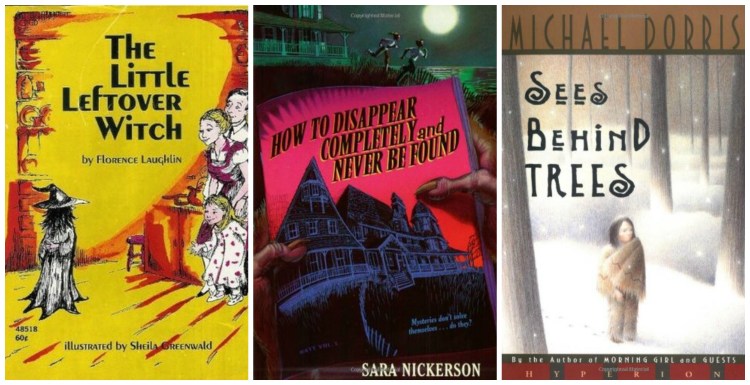
Books1-3

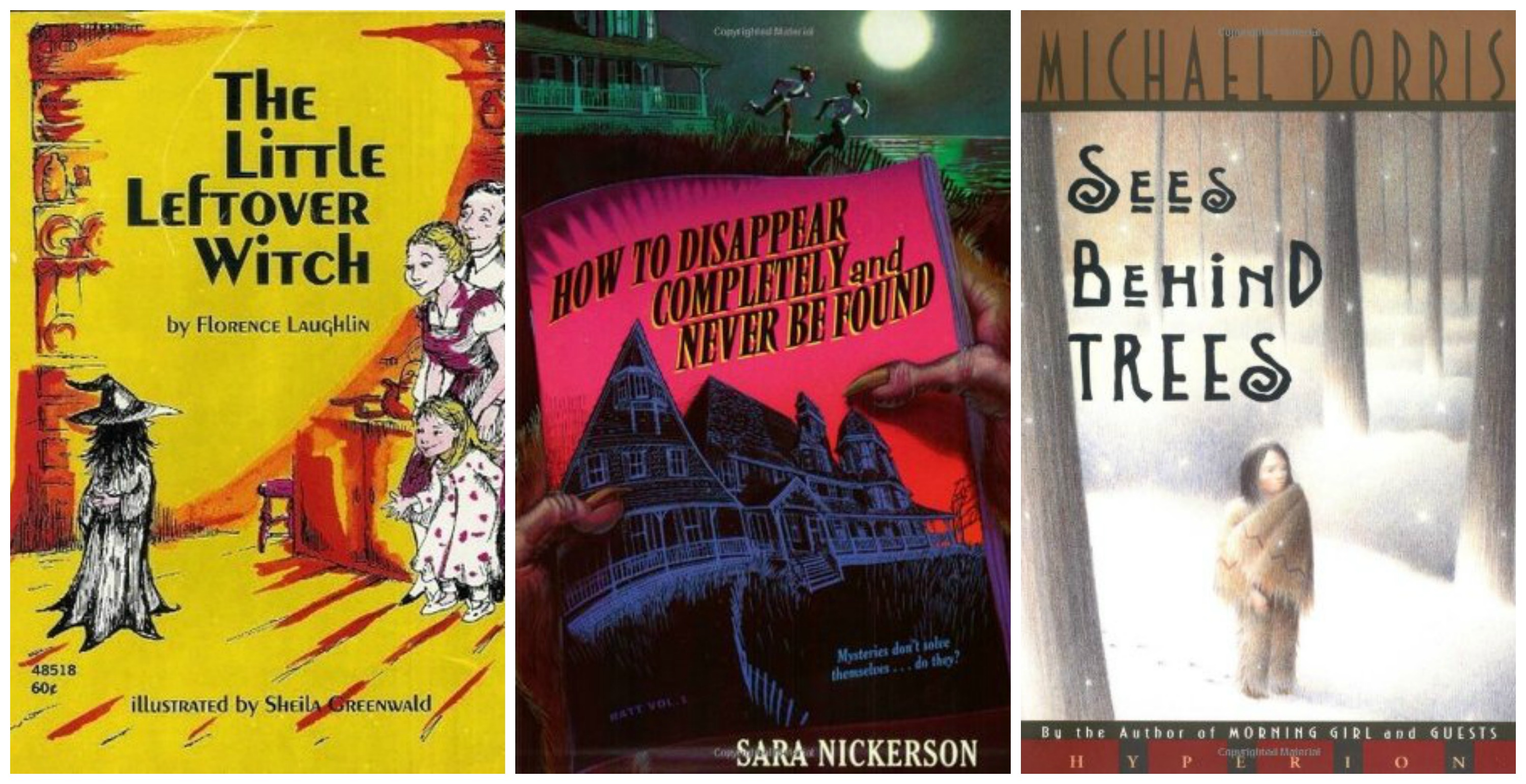
1. The Little Leftover Witch by Florence Laughlin – 1960

A little lost witch undergoes a magical transformation when she’s loved by a human family in this heartwarming story. When Felina, a little witch, breaks her broom on Halloween and can’t fly home, she is stuck with the Doon family and their black cat, Itchabody, for an entire year. Although she’s homesick and unhappy, the Doon parents and their daughter, Lucinda, do their best to make Felina feel welcome. (And she has no trouble with Itchabody at all!) As time passes, the mischievous Felina learns what it means to be part of a family—and how, with love, she will always belong.

My Rating – 5 stars

My Comments – This is such a beautiful little story. It’s not at all what I thought it was going to be, but I absolutely loved it. To see my full review, click here.

2. How to Disappear Completely and Never Be Found by Sara Nickerson – 2003

Margaret’s father died in a mysterious drowning accident when she was eight years old. Four years later, her mother still won’t talk about it — in fact, she doesn’t talk about much of anything. But when Margaret’s mother takes her and her little sister, Sophie, to a strange abandoned mansion and puts a FOR SALE BY OWNER sign in the front yard, Margaret is determined to solve the puzzle of her family, once and for all.

Armed with three strange clues — a swimming medal, a key, and a handwritten comic book — Margaret returns to the mansion alone. With the help of Boyd, the lonely, comic-book-obsessed boy next door, she discovers that truth can be stranger than fiction — depending on who’s telling the story.

My Rating – 4 stars

My Comments – This book was a favorite in my classroom library, partly due to the graphic component. Part of the story is told through comic book format.

3. Sees Behind Trees by  Michael Dorris – 1999

Visually impaired Walnut cannot earn his adult name the same way other boys do, by hitting a target with a bow and arrow. With his highly developed other senses, however, he earns a new name: Sees Behind Trees. “Dorris takes on some meaty existential issues here; he does so with grace, bighearted empathy, and always with crystal-clear vision”. —School Library Journal

My Rating – 4 stars

My Comments – This is a tiny book– only 100 pages– but it makes a big impact.
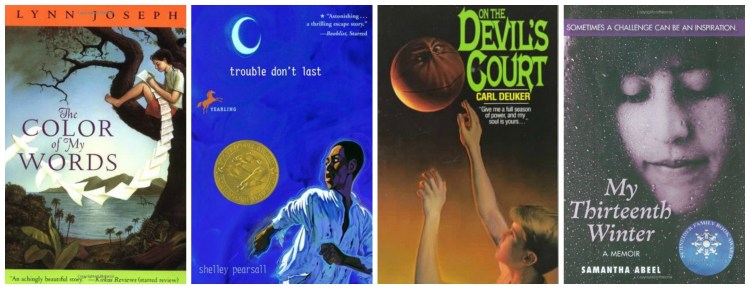
Books4-7

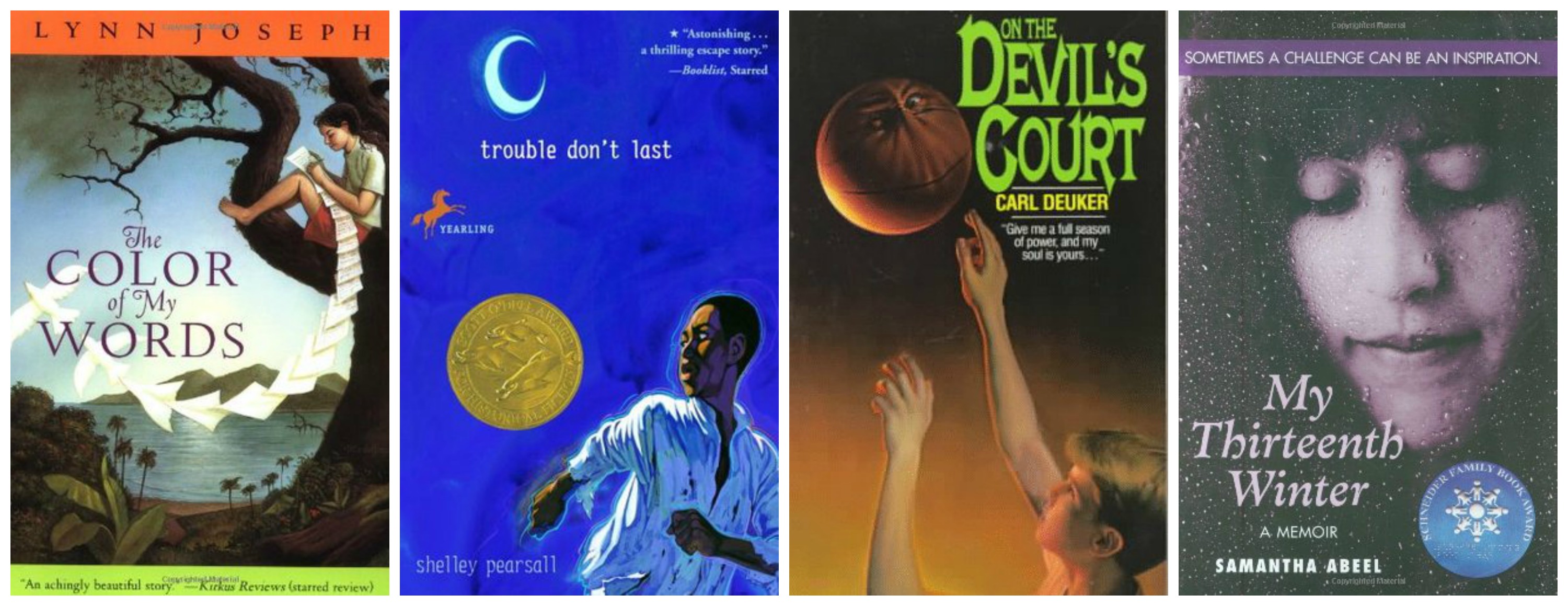
4. The Color of My Words by Lynn Joseph  – 2000

Twelve-year-old Ana Rosa is a blossoming writer growing up in the Dominican Republic, a country where words are feared. Yet there is so much inspiration all around her — watching her brother search for a future, learning to dance and to love, and finding out what it means to be part of a community — that Ana Rosa must write it all down. As she struggles to find her own voice and a way to make it heard, Ana Rosa realizes the power of her words to transform the world around her — and to transcend the most unthinkable of tragedies.

My Rating – 3 stars

My Comments – This is a sad story, but one with hope through words.

5. Trouble Don’t Last by Shelley Pearsall – 2003

Eleven-year-old Samuel was born as Master Hackler’s slave, and working the Kentucky farm is the only life he’s ever known—until one dark night in 1859, that is. With no warning, cranky old Harrison, a fellow slave, pulls Samuel from his bed and, together, they run.

The journey north seems much more frightening than Master Hackler ever was, and Samuel’s not sure what freedom means aside from running, hiding, and starving. But as they move from one refuge to the next on the Underground Railroad, Samuel uncovers the secret of his own past—and future. And old Harrison begins to see past a whole lifetime of hurt to the promise of a new life—and a poignant reunion—in Canada.

In a heartbreaking and hopeful first novel, Shelley Pearsall tells a suspenseful, emotionally charged story of freedom and family.

My Rating – 3 stars

My Comments – Samuel’s endearing voice is what I remember most about this gripping historical fiction novel.

6. On the Devil’s Court by Carl Deuker – 1991

Summary from Amazon:

What would you give to be your school’s superstar? After reading Dr. Faustus, Joe considers the merits of selling his soul to the devil. Suddenly, he finds himself changing from a lousy basketball player and a C student to the star athlete he always dreamed he could be. Even though he isn’t sure if he actually made a deal with the devil, he can’t help but enjoy the benefits that come with his newfound abilities. But is achieving his dreams worth what he may have given up?

In this coming of age sports novel, Joe learns the power of belief and that the only goals worth attaining are the ones that you earn — on your own.

My Rating – 3 stars

My Comments – I’m not a big fan of sports novels, but the angle that this one took really kept my attention. Fans of Mike Lupica’s books would enjoy this one.

7. My Thirteenth Winter by Samantha Abeel – 2005

In this beautiful and chilling memoir, twenty-five-year-old Samantha Abeel describes her struggles with a math-related learning disability, and how it forced her to find inner strength and courage.

Samantha Abeel couldn’t tell time, remember her locker combination, or count out change at a checkout counter — and she was in seventh grade. For a straight-A student like Samantha, problems like these made no sense. She dreaded school, and began having anxiety attacks. In her thirteenth winter, she found the courage to confront her problems — and was diagnosed with a learning disability. Slowly, Samantha’s life began to change again. She discovered that she was stronger than she’d ever thought possible — and that sometimes, when things look bleakest, hope is closer than you think.

My Rating – 4 stars

My Comments – This is such an important book. Abeel’s descriptions of what her life was like with an undiagnosed learning disability haunted me for weeks after I read it, and her joy at finally getting the help she needed brought tears to my eyes. In my opinion, it is a must read for educators. Also, this summary doesn’t mention the fact that, while Abeel struggled in some areas, she was always a talented writer and poet. After you read My Thirteenth Winter, check out her poetry in Reach for the Moon.
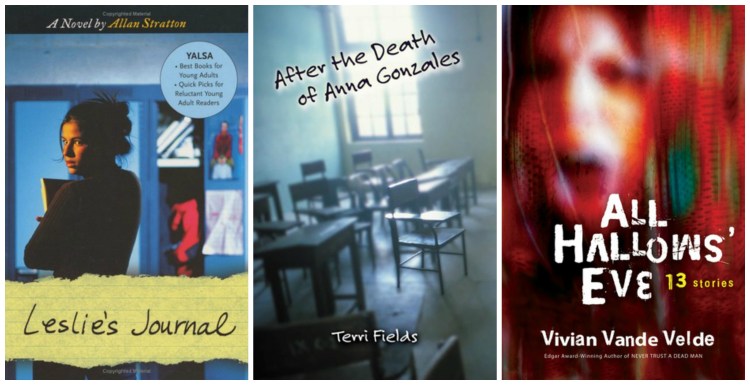
Books8-10

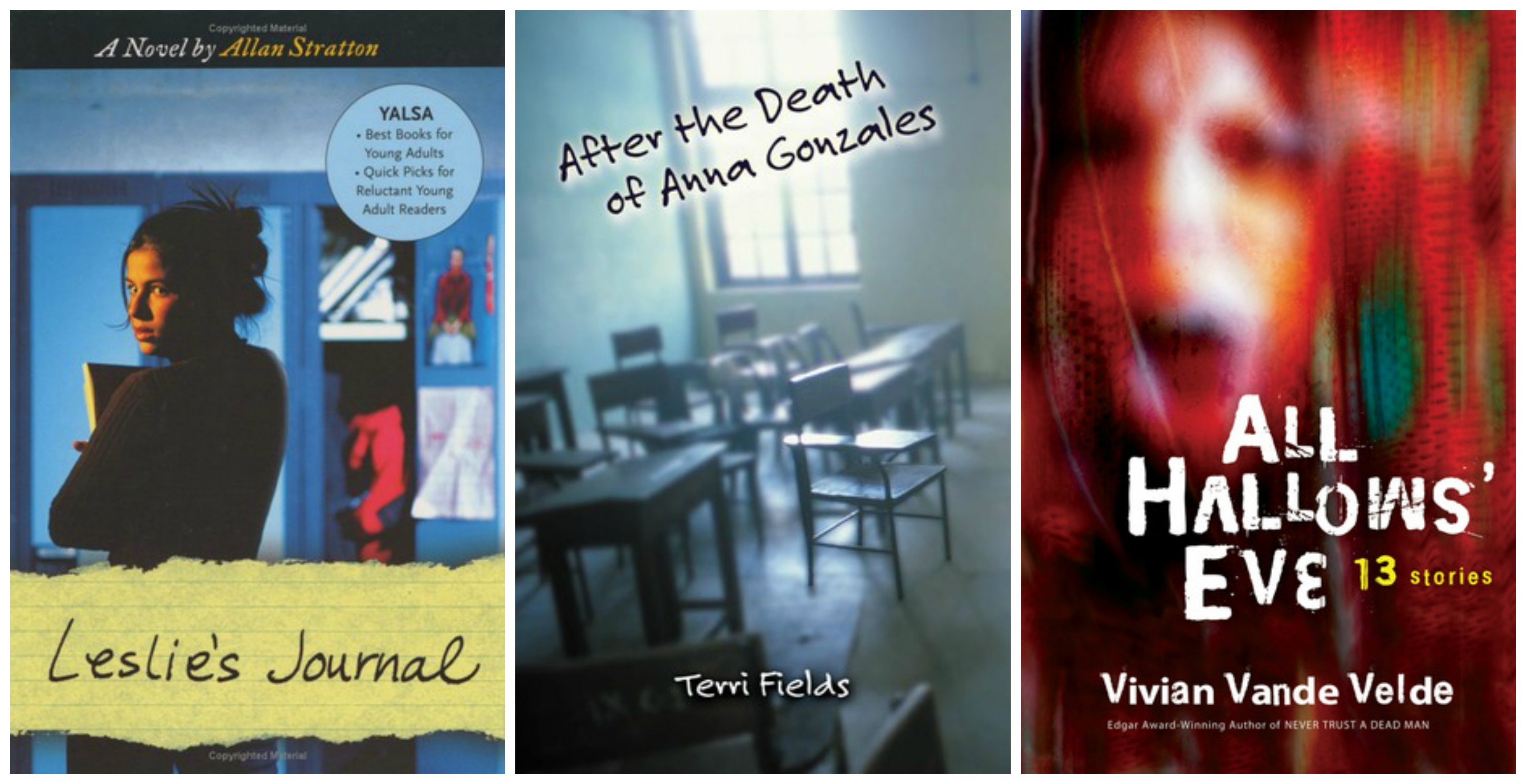
8. Leslie’s Journal by Allan Stratton – 2000

A gripping story about the dark side of a first love.

Leslie can’t seem to avoid trouble, whether it’s at school or at home. Just as life seems at its lowest, Jason McCready, the exceedingly cool new guy at school, enters her life.

Now Leslie is the envy of all the girls. But Jason’s appearance is deceiving — he is determined to control every aspect of Leslie’s life, and he begins terrorizing her in unimaginable ways.

When a substitute teacher reads the private English-class journal in which Leslie reveals Jason’s abuse, Leslie is suddenly forced into hard choices and terrifying action to take back her life.

Updated to reflect the contemporary world of the Internet, cell phones and text messaging, Leslie’s Journal is a suspenseful, fast-paced story about love, friendship and what it means to stand up for yourself

My Rating – 3 stars

My Comments – Apparently this book has been updated, but I’m pretty certain I read the original version. This story deals with some heavy issues, so it’s for more mature readers.

9. After the Death of Anna Gonzales by Terri Fields – 2002

“I can feel
The whispering of the hallway walls
Growing louder as the groups gather.
Each clique adding to its morning input.

“Did you hear?”
“Who told you?”
“Do you think it’s really true?”

New at this school,
I stand alone.
Watching . . .”

Brutally honest and authentic in tone, this collection of voices centers on the suicide of high school freshman Anna Gonzales. Each piece, read alone, portrays a classmate’s or teacher’s personal reaction to the loss, taken hard by some, by others barely noticed. Read together, the poems create a richly textured and moving testimony to the rippling effects of one girl’s devastating choice. Terri Fields has written a thought-provoking, important work that resonates with both pain and hope. This is a book that will stay with readers long after they put it down.

My Rating – 4 stars

My Comments – There were waiting lists for this book in my classroom library. I couldn’t keep it on my shelves. Students read it until it was falling apart and then eventually it disappeared completely. Teen suicide is a horrible thing, but kids like to read about the hard stuff, and this book deals with it in an honest way. Fans of Jay Asher’s 13 Reasons Why would be a good fit for this book and it is a very quick read.

10. All Hallows’ Eve: 13 Stories by Vivian Vande Velde – 2006

A boy is trapped in a possessed car that has stalled in the path of an oncoming train. A girl is dragged into a crypt during a field trip to an eighteenth-century cemetery. A group of friends meet their fate after an unsettling visit with a backwoods psychic. And that’s just the beginning. Celebrated author Vivian Vande Velde is at her spine-tingling best in this collection of thirteen scary stories, all of which take place on Halloween night. With tales that range from the disturbing to the downright gruesome, this is one collection that teens will want to read with the lights on . . . and the doors locked.

My Rating – 4 stars

My Comments – I love scary stories and there are some scary stories in this book. Too many horror stories for kids have the Scooby-Doo ending. Oh! It was just Farmer Bob in a mask! Not these. I enjoyed almost all of the 13 stories, but it was the third one– “Morgan Roehmar’s Boys”– that made me sit up and take notice. It reminded me of when I first picked up The Hunger Games back in 2009 and thought, Is she REALLY going to have kids killing kids? Oh, yep. She is. Vivian Vande Velde’s book hit me the same way. Is this real horror or kid horror? Oh, real horror. Got it. Now to check behind me before I keep reading. The stories are both scary and clever, and Velde will keep you on your toes with all the twists. Seriously, go read this book.

BookCollage

See? Do you see what I’m talking about now?

These are good books, and they deserve more attention.

Go read one of them today!

Encyclopedia of *MY* Ordinary Life: A Plagiarism of the Best Intentions

EncyclopediaOfAnOrdinaryLife

I don’t know about you, but I could use some reasons to laugh this week. If you don’t know what I’m talking about, just turn on the news. On second thought, don’t. It’ll just bring you down.

Anyway, I have been watching the news, so I’ve been needing a way to cheer up. Today I stumbled upon something in the hidden crevices of my computer that made me laugh and, on the off chance that it might make you laugh too, I’ve decided to share it.

Really, though, you shouldn’t thank me for this bit of mirth. You should thank Amy Krouse Rosenthal (who has a really cool website).

Two and a half years ago, I read Amy’s memoir, Encyclopedia of an Ordinary Life, in which she shares personal anecdotes in the form of an encyclopedia. Rather than try to explain how she turns this classic nonfiction format into something quirky and fun, here’s a picture of pages 108 and 109 in the G section:

The end of the GROCERY CART entry on page 110 says, “unpacking the groceries at home, I realized the rose was still sitting there at the store, paid for, on the bottom of the cart.”

I loved this book. What a unique, creative idea! And, as with all unique, creative ideas that other people come up with, I wished it had been mine. So, I decided to copy it.

Shortly after finishing Amy’s memoir, I began writing my own encyclopedic snippets, trying to recreate her cleverness. I told myself that my work was my own, that I was simply “inspired by” her book. But after a few pages, I had to admit that it wasn’t so much emulation as plagiarism, and poor plagiarism at that. So I tucked my attempt away and forgot about it.

Today I stumbled upon the file, and it really put a smile on my face. Not only did it remind me of how much I enjoyed Encyclopedia of an Ordinary Life, which I’ve been re-reading and re-enjoying all afternoon, but some of my anecdotes also tickled my funny bone.

Here are three entries from the ill-fated, quickly-abandoned, somewhat-plagiarized Encyclopedia of MY Ordinary Life. I hope you enjoy them (and that Amy Krouse Rosenthal forgives me for them).

EXTREMELY LOUD AND INCREDIBLY CLOSE

In the movie Extremely Loud and Incredibly Close, there is a man who does not speak. He has the words YES and NO tattooed on the palms of his hands. While watching the movie with my husband, I noticed something interesting that I couldn’t wait to talk about when it was over.

Walking out of the theater, I proudly told my hubby, “The words were on the wrong hands! NO was on the right hand and YES was on the left. It should have been the other way around. Your right hand is the one you use to shake and take oaths. It represents your promise, your guarantee, your word. It’s symbolic. YES should be on his RIGHT hand.” I grinned at my cleverness.

My husband responded, “The whole thing was dumb. Is holding up your hand really any faster than nodding your head? I mean, what if he was carrying something?” Oh. Huh. Good point.

MISUNDERSTOOD SONG LYRICS

Whenever I watch The Big Bang Theory (which is a LOT) I can never understand or remember if the theme song is staying “dense” or “tense”. They both seem like they could work. “The whole universe was in a hot ______ state.” Every single time, I have to ask my husband, “dense or tense” and he tells me. And I promptly forget again. Ok, it’s “dense.” I just asked him. But couldn’t the whole universe be in a hot tense state too? Sometimes I think it is.

In the song “No Rain” by Blind Melon, I thought for a very long time that he was saying, “You know I like to keep my cheating strategied (pronounced STRA-ti-ge-ee-ed.” I now know he is actually saying, “You know I’d like to keep my cheeks dry today.” Fine. But really, if you were cheating a lot, wouldn’t you want to have a strategy to keep it all from falling apart?

I still have no idea what the lyrics to “Roam” are, but that has not prevented me from singing along with the B-52’s at the top of my lungs for the past twenty years.

Spider

SPIDER, FAKE

I found my fake tarantula in a drawer in my classroom the other day and decided to bring it home. (I am quitting teaching at the end of this year, so I have been taking home about one item a day from school that I want to keep. At this rate, I will have my entire classroom cleaned out by August of 2013.)* Not having any better place to carry the fake spider, I put it in my purse. (Yes, you already know where this story is going, but I’m going to tell it anyway.)

I have a very short attention span. I am very good about following through on tasks and getting things done, but that is because I write EVERYTHING down. If I don’t, I forget it. I can be less than five minutes away from my house and think to myself, As soon as you walk in the door, go write shaving cream on the grocery list. Do it. Shaving cream, shaving cream, shaving cream, shaving cream, shaving… I wonder if I should postpone that vocab quiz until Friday. And then it’s gone. I won’t realize until I get home from the grocery store the next day and then try to shave my legs, that I’ve forgotten to write down shaving cream. So when I told myself I would take the spider out of my purse when I got home, I didn’t even pretend to believe myself.

The next morning on the way to work, I was stopped at a red light (thank goodness) when I decided to get my work badge and keys out of my purse. Half looking at the road, half looking at my purse, I pulled the silver lanyard out, felt the extra heaviness of it, glanced over, saw that giant tarantula hanging from the clasp by his hairy legs and screamed so loud I hurt my own ears. The whole time my brain was yelling, “Stop, you idiot! It’s the fake spider! You knew it was in there! You knew this would happen! You’re making a fool of yourself!” But my body wouldn’t listen, couldn’t keep up, and was just trying not to have a heart attack.

Afterwards, I didn’t know what to do. I knew I couldn’t put it back in my purse because in just five short minutes I would forget it was there again and repeat the whole process, maybe while going 60 mph. The light turned green, so I stuffed the thing in the glove compartment. And forgot about it. Now, every time I open the glove compartment, I scare myself, but I still can’t remember it’s in there long enough to take it out. **

*2014 Note: I actually managed to clean out my classroom much sooner than that, thank you very much, former self.

** I don’t think the spider is still in there. I’m pretty sure I moved it… somewhere else. ?

That’s all, folks.

I’m going to keep the rest of the entries to myself, since many of them were even more embarrassing than these. But I highly recommend you read Encyclopedia of an Ordinary Life by Amy Krouse Rosenthal. It should brighten your day whether the news has gotten you down or not.